Why Is It Worth Integrating an Audio Guide into Your Museum?
But what exactly is it? An audio guide is a tool that combines the functionality of a mobile application with the ability to play professionally prepared recordings. Thanks to it, visiting a museum becomes a true experience. You hear a narrator talking about exhibitions, historical curiosities, or artistic techniques.
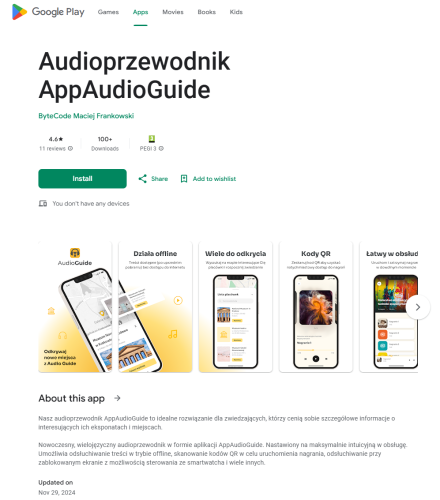
Importantly, an audio guide application can operate in various ways. Specific models rely on GPS points that automatically trigger appropriate recordings when you arrive at a particular location. Others use QR codes placed next to exhibits. You just scan the code with your phone to learn everything you want to know.
A Museum for the 21st Century
Museums worldwide have been undergoing a transformation for years. The days when visitors simply strolled between exhibits are gradually fading into the past. Now, providing unique experiences is key.
Imagine standing in front of a painting with roots in the Renaissance. Instead of reading dull text, you hear a narrator telling you about the artist's struggles, painting techniques, or even scandals associated with the creation of the work. Doesn't that sound more appealing?
Audio guides make a museum more than just a place "to look at." It becomes a space for experiencing, learning, and discovery. Our museum guide application transforms how people perceive culture and art. What once seemed distant and complicated becomes understandable and even inspiring.
Check out details of our AudioGuide for the National Museum in Gdańsk!
How Does the Audio Guide Application Work?
The technology behind an audio guide may seem complex, but in practice, it’s extremely simple. The priority is an application running on mobile devices, such as phones or tablets. In some cases, museums also offer dedicated devices for on-site rental.
The most crucial element is the content management system (CMS) – the brain behind the audio guide. It enables easy management of all the information available in the application.
Thanks to the CMS:
- you can add new content, such as descriptions of new exhibitions;
- introduce updates, including changes in opening hours or special events;
- make materials available in various languages, attracting international tourists;
- analyze usage statistics (to better understand visitor needs).
Why is a Museum Guide Application the Future?
People expect solutions that are functional and convenient. Audio guides fit these expectations perfectly. With their help, a museum can offer:
- freedom to explore at one’s own pace;
- interactive elements, such as maps;
- access to multimedia – photos, videos, or recordings.
The ecological aspect also plays a significant role. Traditional paper guides generate waste that later ends up in landfills. Mobile applications eliminate this problem while offering greater possibilities.
“If you’re wondering whether investing in an audio guide makes sense, think of the benefits. On one hand, you have satisfied guests leaving the museum with smiles on their faces. On the other – you gain a tool that distinguishes your institution from the competition.” – Maciej Frankowski, creator of the AppAudioGuide application.
How Does the Audio Guide Application Change the Museum Experience?
The audio guide created by ByteCode is a true revolution in visiting museums. Thanks to it, the traditional approach – where visitors relied on dry descriptions and fixed routes – transforms into an interactive and personalized adventure.
Think about how many times, while in a museum, you had to break your visiting rhythm to wait for a guided group or search for information on plaques. The audio guide application eliminates these obstacles. Now, the visit happens on your terms. You decide which exhibits are worth spending more time on and which you can skip.
Thanks to the audio recordings feature, exploring becomes smoother. Imagine standing in front of an artwork and hearing a voice telling you about its history, context, and artistic techniques.
How Is the Guide Application Implemented in a Museum?
The process of implementing an audio guide might seem complex, but in reality, it’s simple and intuitive. The key is to properly prepare the content and adapt the application’s features to the museum’s specifics.
Steps to implement a museum guide application:
- Content preparation – This is the most critical stage. Audio recordings must be not only factually accurate but also engaging. Visitors should feel like they’re listening to a story, not a school lecture.
- Integration with museum infrastructure – The guide application should be compatible with existing infrastructure. Does your museum have Wi-Fi points? Or is it better to opt for offline functionality? These decisions impact user comfort.
- Testing and optimization – Before launching the application, it’s worth conducting tests with visitors. This will reveal what works and what needs improvement. Is the interface intuitive? Are the recordings clear enough? These details can determine the project’s success.
The Role of CMS in Managing Audio Guides
The CMS plays an indispensable role in managing the audio guide. It’s the heart of the system, giving museums full control over the content.
With CMS, you can:
- easily add new content, like descriptions of temporary exhibitions;
- update information in real-time – if museum opening hours change, just a few clicks are needed;
- analyze visitor data – learn which exhibits attract the most interest (helpful for planning future exhibitions).
Variety of Audio Guide Features
Contrary to appearances, audio guides aren’t just about audio recordings. Modern applications offer features that make museum visits more interactive and engaging.
Examples include:
- virtual maps – helping visitors navigate the museum (just glance at the screen to see where you are and which exhibits are nearby);
- multimedia – some applications provide photos, videos, or interactive 3D models;
- language options – a true blessing for tourists (audio guides offer recordings in multiple languages, making the museum more accessible globally);
- offline mode – not every museum has access to fast internet (with offline mode, visitors can use the app seamlessly regardless of technical conditions).
Are Audio Guides Only for Large Museums?
Absolutely not. While audio guide applications are often associated with large institutions like national museums or art galleries, they can also be implemented in smaller venues.
Small museums or local memory houses can successfully use this solution, adapting it to their needs. Moreover, smaller institutions often benefit from a more intimate atmosphere.
An excellent example is The Open-Air Museum in Sidzina – Museum of Folk Culture, where the audio guide facilitates individual tours and helps relieve guides during peak seasons.
“An audio guide doesn’t require significant financial investment. There are solutions that can be implemented on a smaller scale without needing dedicated devices. All you need is a smartphone app and well-prepared content.” – Maciej Frankowski, creator of the AppAudioGuide application.
What Are the Costs of Implementing an Audio Guide Application?
A common question museums ask is about the costs. Is implementing an audio guide expensive? The answer is: it depends. Costs may vary depending on the museum’s size, the application’s features, and the level of customization.
The simplest solutions, based on ready-made platforms, are relatively inexpensive (under 5,000 PLN per year) and can be implemented quickly (7–21 days).
Remember!
Implementation costs can be partially offset by introducing a fee for using the application. Many museums offer audio guides as an additional service, included in the ticket price or available for a nominal fee.
Examples of Implementations in Poland
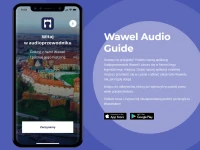
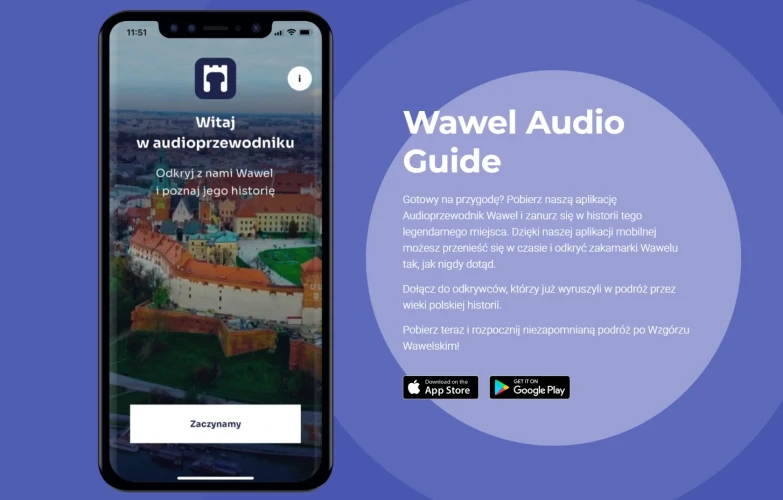
More and more Polish museums are implementing audio guides, recognizing their potential in attracting visitors. For example, The Royal Castle on Wawel Hill, where the guide application allows visitors to explore the secrets of Wawel Hill in a completely new way. Visitors can use an interactive map, audio recordings in various languages, and additional video materials.
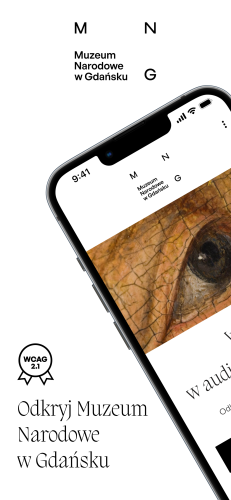
Another great example is the previously mentioned National Museum in Gdańsk, which offers guests access to unique content, including detailed artwork descriptions and historical curiosities. Additionally, the museum regularly updates content in the app, adapting it to changing exhibitions.
We mustn’t forget smaller venues like The Archdiocesan Museum in Kraków, which successfully implemented our audio guide system, making its exhibitions more accessible and engaging.
Why Invest in an Audio Guide?
Investing in an audio guide is a step toward modernity and better visitor experiences. It’s a tool that:
- increases guest satisfaction, offering personalized and interactive tours;
- helps museums stand out from the competition, attracting new visitors;
- opens doors to international audiences thanks to multilingual support;
- enables quick content updates, which is particularly important for temporary exhibitions.
The Museum of the Future at Your Fingertips
Museums are no longer just places to look at exhibits – they are spaces for experiencing and discovering. Audio guides fully unlock this potential. They’re not only convenient for visitors but also an opportunity for museums to better meet the needs of contemporary audiences.
If you’ve ever wondered whether it’s worth implementing an audio guide in your museum, the answer is simple – yes. It’s a step toward modernity that combines tradition with technology, creating entirely new experiences for visitors.
Request a quote today!
Main image source:
Share: